
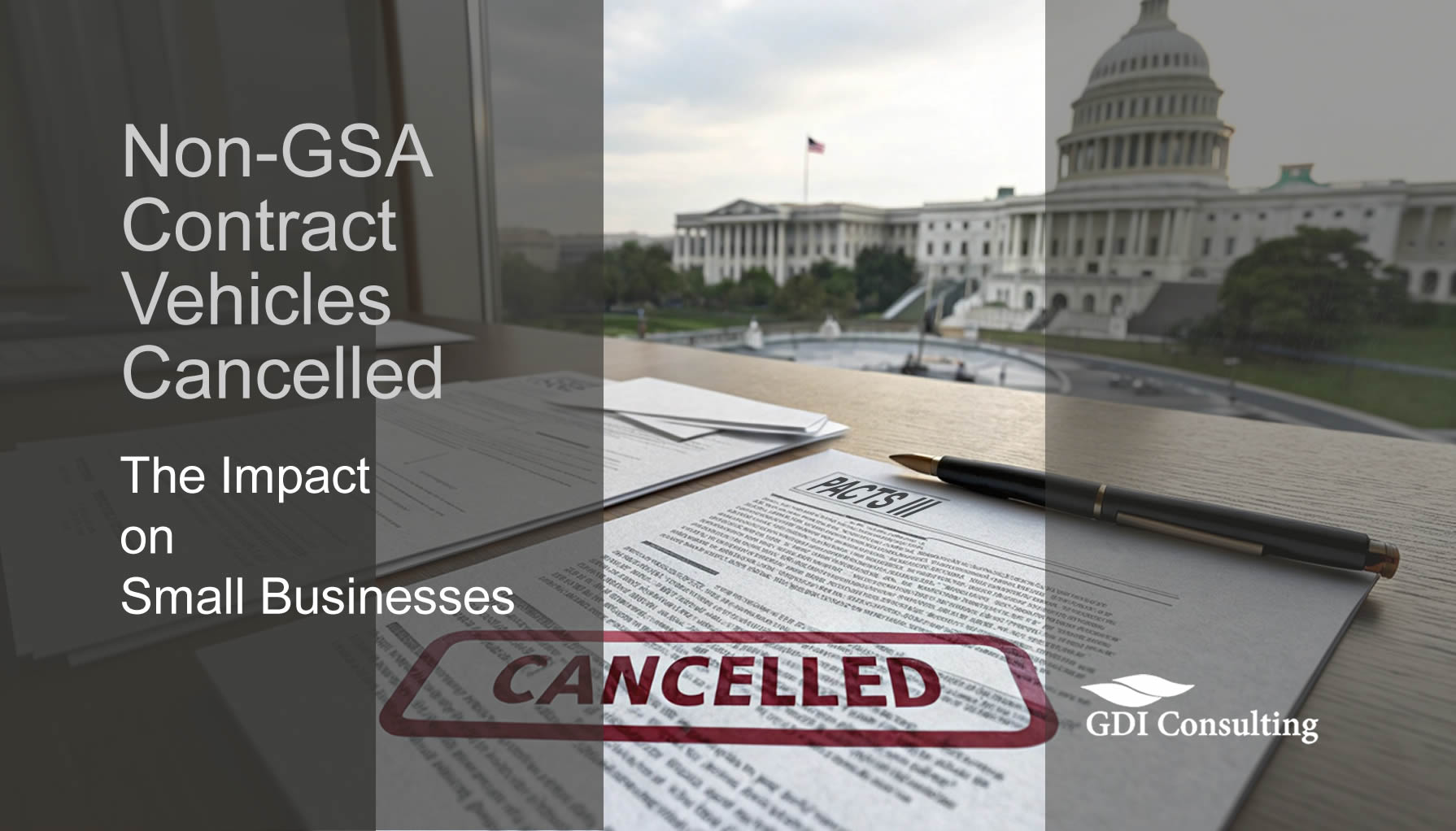
Understanding Federal Contracts Cancellation
Over the past two fiscal years, a clear pattern has emerged in federal procurement: agencies are cancelling their agency‑specific, non‑GSA contract vehicles and migrating requirements to existing “Best‑in‑Class” contracts managed by the General Services Administration (GSA). This Federal Contracts Cancellation trend is reshaping the competitive landscape for thousands of small businesses that traditionally relied on set‑aside Indefinite‑Delivery, Indefinite‑Quantity (IDIQ) vehicles for prime opportunities. From professional services to information technology and facilities support, the shift marks an acceleration of category management, portfolio consolidation, and reduced administrative overhead. For America’s small businesses—often the innovation engine of the federal industrial base—the cancellations create both existential challenges and hidden openings.
Why Are Non‑GSA Vehicles Disappearing?
The immediate catalyst for the current wave of Federal Contracts Cancellation decisions is Executive Order 14240 (March 2025), which directs civilian and defense agencies to eliminate duplicative contracting mechanisms and rely on government‑wide acquisition contracts (GWACs) deemed Best‑in‑Class (BIC). Acquisition executives now vet any planned vehicle above $100,000 against three questions:
- Redundancy – Can an existing GSA vehicle deliver the same scope?
- Mission Criticality – Is a bespoke vehicle the only avenue to meet urgent mission needs?
- Cost Efficiency – What is the administrative burden of creating and managing another IDIQ? If redundancy exists, policy encourages cancellation or non‑award. DHS’s termination of the Program Management, Administrative, Clerical and Technical Services (PACTS III) solicitation in June 2025 is the headline example, but Treasury’s TIPSS‑5 and the Army’s planned RS3 follow‑on reveal the pattern is truly government‑wide. Analysts expect as many as 25 major IDIQs to disappear by the end of FY 2026.
Immediate Consequences for Small Businesses
- Prime‑Contractor Slot Loss – When an agency vehicle disappears, the only path to prime revenue is through an existing GSA platform. Firms without a seat are locked out until the next on‑ramp.
- Stranded Bid Investment – Small companies routinely spend $50k–$150k preparing proposals that will never be evaluated.
- Longer Sales Cycles – Task orders under consolidated GWACs draw a select but highly capable pool, lengthening proposal lead time and stiffening competition.
- Goal Pressure – Agencies still must hit small‑business targets, but with fewer prime positions, teaming arrangements become harder to secure.
- Pricing Compression – Consolidated buying power pushes labor rates downward, squeezing already‑thin margins. According to a 2025 survey by the National Association of Government Contractors, 63 percent of small federal suppliers reported “material revenue risk” linked directly to recent or anticipated vehicle cancellations.
Policy Drivers Behind the Shift
- Category Management & BIC Mandate – OMB guidance funnels spend to vehicles such as GSA MAS, OASIS+, Alliant 3, and NASA SEWP VI.
- Budget Constraints – GSA estimates every cancelled IDIQ saves an agency $5–$7 million in administrative costs over a decade.
- Data Transparency – Centralized vehicles simplify spend tracking, enabling clearer Congressional oversight.
- Acquisition Workforce Shortages – Consolidation mitigates staffing gaps by off‑loading contract administration to GSA.
Case Studies of Recent Cancellations
| Vehicle | Agency | Original Ceiling | Status | Disposition |
|---|---|---|---|---|
| PACTS III | DHS | $8.4 B | Cancelled (Jun 2025) | Requirements to OASIS+ & MAS |
| TIPSS‑5 | Treasury/IRS | $4.5 B | Cancelled (Apr 2025) | Shifted to Alliant 3 |
| RS3 Follow‑On | U.S. Army | $7.5 B | Cancel/No Recompete (pending) | Transition to OASIS+ |
| SeaPort‑NxG 2.0 | U.S. Navy | $5.0 B | Under review | Likely migrate to SEWP & OASIS+ |
Note: These examples illustrate that Federal Contracts Cancellation is not confined to one agency or sector.
Financial Impact on a Typical Small Firm
Financial modelling illustrates how one cancellation reverberates through a small firm’s profit‑and‑loss statement:
- Lost Gross Revenue – A HUBZone firm forecasting $10 million over ten years on PACTS III must revise to $0 until an OASIS+ on‑ramp opens.
- B&P Expense – A $90,000 proposal effort may erode 18 percent of annual profit.
- Opportunity Cost – Capture staff assigned to the bid were unavailable for alternate pursuits.
- Indirect Effects – Banks assessing pipeline stability may tighten lending terms by 50–100 basis points.
Seven Ways to Adapt
- Secure a GSA MAS Contract MAS is the quickest route into consolidated spend; experienced consultants can help achieve award in 4–6 months.
- Plan for OASIS+ On‑Ramps GSA announced rolling on‑ramps starting Q2 FY 2026—assemble scorecards and past‑performance artifacts now. See Case Studies
- Team Early and Often Approach incumbent OASIS+ primes about subcontracting; agencies still track socio‑economic credit.
- Strengthen Competitive Pricing Leverage cost‑data analytics to benchmark rates against BIC averages.
- Diversify Customer Portfolio Pursue state, local, and commercial buyers to offset federal concentration risk.
- Amplify Advocacy Engagement Join coalitions such as the Professional Services Council or Small Business Legislative Council to influence policy tweaks.
- Invest in Capture Automation AI‑driven tools reduce per‑proposal cost, enabling quicker response to smaller task‑order competitions.
Federal Contracts Cancellation and the Path onto GSA Vehicles
| GSA Vehicle | Primary Scope | Small‑Business Entry Method | Next Forecasted Opportunity |
|---|---|---|---|
| MAS | Products & services across 12 large categories | Direct schedule offer via eOffer | Continuous |
| OASIS+ | Professional services (six domains) | On‑ramp scorecard submission | Q2 FY 2026 |
| Alliant 3 | Complex IT solutions | Teaming or open season award | Draft RFP Oct 2025 |
| POLARIS | Small‑business GWAC for IT | Set‑aside pools (WOSB, SDVOSB) | Protest resolution then re‑release |
Source: GSA Interact updates and Federal News Network
Market Forecast and Outlook
Industry researchers project federal discretionary budgets to remain effectively flat through FY 2028. As agencies look inward for savings, consolidation will likely intensify:
- Near Term (6–12 Months) – Expect additional civilian‑agency cancellations, particularly within health and energy sectors.
- Mid Term (12–24 Months) – DoD components will increasingly adopt the BIC doctrine once Alliant 3 and OASIS+ defense pools mature.
- Long Term (24–36 Months) – GSA may pilot cross‑agency task‑order portals that automatically route requirements to the correct GWAC, potentially sidelining even more agency‑level vehicles. For small businesses, this outlook underscores the urgency of securing a foothold on an existing platform and expanding teaming relationships now—not later.
Tools and Resources for Small Businesses
- GSA Vendor Support Center – Tutorials for MAS onboarding.
- GovWin IQ – Market‑intel platform for tracking cancellation notices and on‑ramp timelines.
- OMB Max Portal – Category‑management dashboards highlighting BIC usage.
- How to Build a Compliant Price List – Internal guide to preparing MAS pricing disclosures.
Advocacy and Oversight
Congressional hearings held by the House Small Business Committee in May 2025 signaled bipartisan concern that aggressive consolidation could reduce the small‑business industrial base. Witnesses argued that a narrower supplier pool raises long‑term national‑security risks. The Small Business Administration (SBA) testified that proper use of small‑business pools within GWACs can preserve participation levels. SBA Office of Government Contracting (external link) provides policy updates and training calendars.
Frequently Asked Questions
Q1: Will agencies reimburse proposal costs after cancelling a vehicle?
A: Almost never. FAR 33.104 limits recovery to successful protests showing clear agency error.
Q2: How often does GSA open on‑ramps for OASIS+?
A: Semi‑annually, with the first expected April–May 2026.
Q3: Can subcontracting satisfy socio‑economic goals under consolidated vehicles?
A: Yes. FAR 19.702 requires subcontracting plans for large primes and credit can be counted at the task‑order level.
Q4: What happens to in‑process task orders when an IDIQ is cancelled pre‑award?
A: Agencies must re‑issue the requirement on another contract vehicle.
Q5: Where can I track forthcoming cancellations?
A: Monitor SAM.gov notices labelled “Intent to Cancel” and GSA’s BIC Category Management portal.
Conclusion
The accelerating wave of Federal Contracts Cancellation is more than a policy fad—it is now the default trajectory of federal acquisition strategy. While the consolidation drive promises greater efficiency for agencies and taxpayers, it forces small businesses to rethink capture strategy, expand alliances, and modernize internal systems faster than ever before. Proactive entrepreneurs will get on a GSA platform, master cost‑data analytics, and cultivate relationships with incumbent primes to remain visible when agency requirements migrate. Policymakers, meanwhile, must ensure that efficiency gains do not hollow out the diverse supplier base the government relies upon for agility and innovation. The next three years will determine which small firms merely survive—and which ones thrive—in this transformed marketplace.
