AEC Tinker AFB Multiple-Award Construction Basic Order Agreement (MACB)
Background
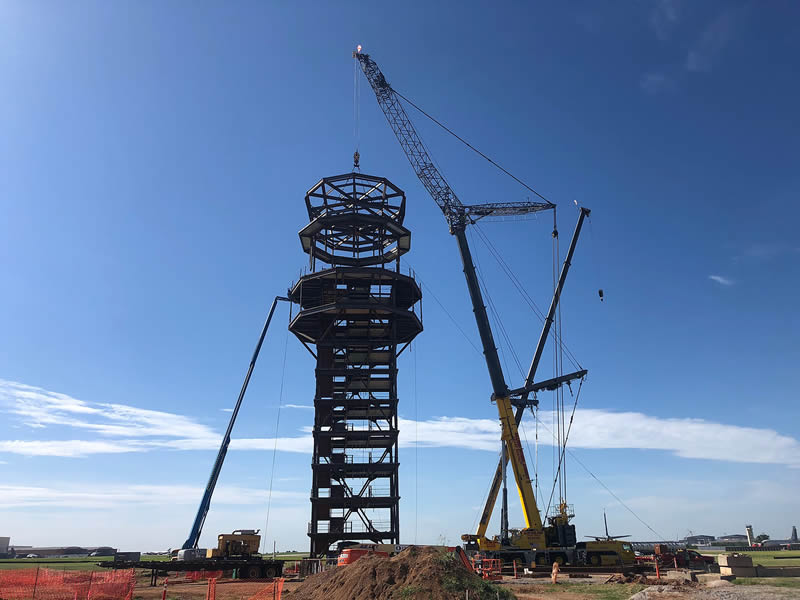
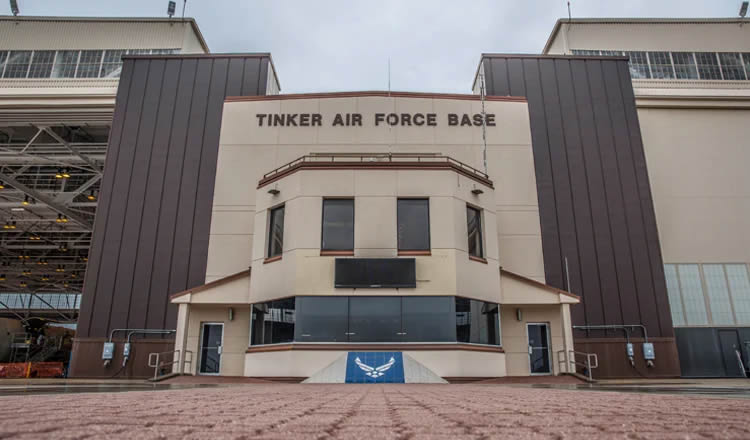
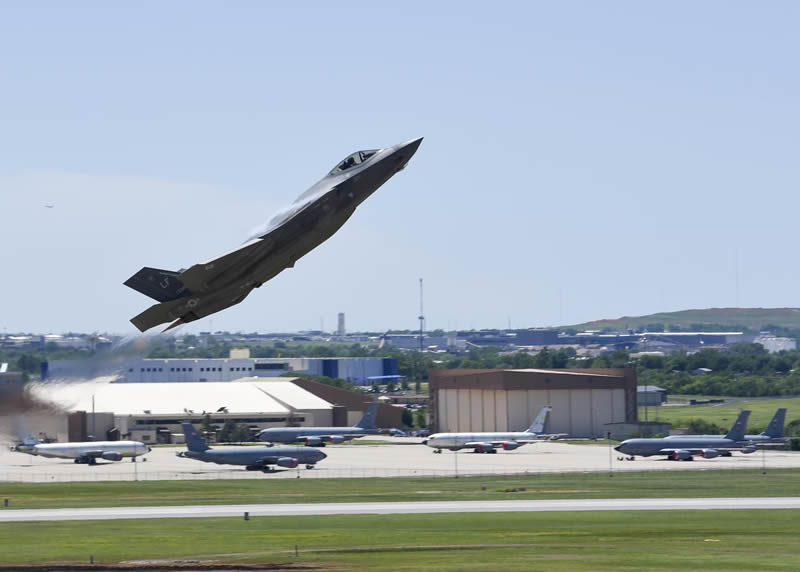
Tinker Air Force Base (TAFB) sits roughly five miles east of downtown Oklahoma City on an impressive 5,500-acre footprint that contains 458 buildings totaling 18.7 million ft². These facilities form the physical heart of the Air Force Sustainment Center (AFSC) Headquarters, where a vast industrial complex overhauls aircraft, engines, accessories, and critical mission software for the joint warfighter. Beyond its depot-level maintenance mission, TAFB also hosts three major flying wings—the 552d Air Control Wing (ACC), Strategic Communications Wing ONE (US Navy), and the 507th Air Refueling Wing (AFRC)—plus key tenant units such as the 38th Cyberspace Engineering Installation Group and DLA’s Defense Distribution Center Oklahoma City, underscoring the base’s multi-service importance to national defense.
The installation’s building stock ranges from cavernous engine-test and avionics hangars to warehouses, dormitories, medical clinics, dining halls, offices, and community support spaces like the base exchange and commissary. Supporting this diverse real-property inventory is an equally complex utility backbone: potable-water plants and storage tanks, OG&E-owned electrical distribution with backup generators, natural-gas loops, storm- and sanitary-sewer networks, and central plants producing steam, chilled water, and compressed air, in addition to POL storage and hydrant-fueling systems for flight operations.
By 2021, many of these assets—some dating to World War II—faced an urgent sustainment backlog that strained the 72 ABW Civil Engineer (CE) Squadron. To accelerate repairs and modernization while reducing in-house design effort, the Air Force issued the Multiple-Award Construction Basic Order Agreement (MACB) as a five-year, $100 million–$250 million IDIQ vehicle capable of awarding task orders from $5 K to $25 M within days rather than months. The MACB’s overarching goal is to give CE a rapid-response toolkit—spanning Design-Build, Partial Design-Build, and Construction-Only methods—to keep TAFB’s mission-critical infrastructure safe, compliant, and ready for the next generation of aerospace sustainment
Summary Description
The Air Force Sustainment Center’s 72nd Air Base Wing at Tinker Air Force Base issued Solicitation No. FA813721R0022 on April 8, 2021 seeking small-business offerors for a Multiple-Award Construction Basic Order Agreement (MACB) under NAICS 236210 (Industrial Building Construction). The procurement was competed as a total small-business set-aside, with the Government planning up to 38 awards. Resultant agreements provide a streamlined, five-year ordering vehicle that supports firm-fixed-price or cost-plus task orders ranging from $5,000 to $25 million, enabling rapid execution of sustainment, repair, and minor construction projects across the installation.
The Air Force estimated a total program magnitude between $100 million and $250 million over the five-year ordering period.
The MACB scope covers a full spectrum of facilities work at TAFB, including—but not limited to—building sustainment and maintenance; structural, roofing, and envelope repairs; HVAC and refrigeration upgrades; electrical distribution and generator projects; plumbing and fire-protection systems; pavement and airfield concrete/asphalt; utility infrastructure (water, steam, chilled water, compressed air, natural-gas, storm and sanitary sewer); and design-build or construction-only delivery of new or renovated industrial, administrative, medical, housing, and community-support spaces. Work may require multi-trade integration, registered A-E design services, LEED or energy-efficiency considerations, and strict adherence to OSHA/EM 385-1-1 safety standards.
Evaluation Criteria
Section M applied a best-value trade-off that weighted:
- Technical/Management Capability – methodology, staffing, and understanding of TAFB mission.
- Past Performance Relevance & Quality – CPARS and client surveys.
- Safety Record – EMR, DART/TRIR, and program maturity.
- Small-Business Participation & Utilization.
- Price/Cost Reasonableness – coefficients and labor rate realism.
Non-price factors combined were significantly more important than price, enabling strengths-based differentiation among qualified small businesses.
Solicitation in a Nutshell
Item |
Details |
|---|---|
| Agency: | Air Force |
| Office: | Air Force Materiel Command, Air Force Sustainment Center, 72nd Air Base Wing |
| Location: | Tinker Air Force Base, Oklahoma |
| Solicitation Number: | FA813721R0022 |
| Contract Period: | 5 year base period |
| Type of Contract and Award: | Firm Fixed Price, Cost Plus Fixed Fee, Basic Ordering Agreement, Task Order |
| Number of Awards: | 38 |
| Contract Value: | $250 million |
| NAICS Codes: | 236210 Industrial Building Construction Size Standard: $45.0 million annual receipts |
| Solicitation Page on SAM.gov: | https://sam.gov/opp/a61ca22241084562bcb9003d77dc8af1/viewM |
Problems & Challenges
In preparing our proposal, GDIC conducted a thorough risk assessment to anticipate key obstacles that could undermine our competitiveness and compliance. By identifying each challenge early, we tailored targeted strategies to ensure our submission remained both compelling and fully aligned with TAFB requirements:
-
Compressed RFP timeline (45 days) amid COVID-19 restrictions
The solicitation’s tight 45-day response window collided with pandemic-driven limitations on site access and in-person meetings. To address this, our team launched a virtual kickoff within 48 hours of release, leveraged high-resolution drone imagery alongside existing CAD archives to build accurate facility narratives, and maintained daily virtual check-ins with TAFB engineers to validate technical assumptions and keep the schedule on track.
- Highly competitive field with up to 38 awardees
With nearly 40 small businesses vying for awards, standing out was essential. We differentiated our client by spotlighting six prior MACB task orders totaling $180 M—all rated “Very Good” or above in CPARS—detailing a guaranteed 96-hour mobilization plan, and showcasing LEED-AP–certified staff to underscore our sustainability and efficiency credentials. - Multiple execution methods across task orders
The MACB vehicle encompassed Design-Build, Partial Design-Build, and Construction-Only delivery, demanding scalable proposal content for each. We mitigated this by creating modular process flows and templated technical narratives—complete with phasing plans and resource charts—that could be rapidly tailored to any delivery method without rewriting core sections. - Stringent safety and performance requirements
Safety metrics such as EMR, DART, and TRIR carried critical weight—an EMR above 1.0 could be disqualifying. We highlighted our client’s corporate EMR of 0.78, zero lost-time incidents over the past three years, and recent third-party safety audit results. Additionally, we integrated an ANSI/ISO 9001–aligned quality plan and a comprehensive accident-prevention program to demonstrate our proactive risk management culture.
How GDIC Prepared a Winning Proposal
GDIC’s proposal development process is built on a foundation of rigorous capture planning, disciplined compliance management, and creative storytelling. By integrating data-driven insights with evaluator-focused communications, we crafted a submission that not only met every requirement but also highlighted our client’s unique strengths and mitigated potential risks:
- Early Capture Intelligence and Competitive Landscape Analysis
From the moment the solicitation dropped, our capture team began mining historical MACC and IDIQ task-order data for Tinker AFB. We mapped the incumbent awardees’ past task-order scopes and CPARS ratings to predict which evaluation factors would carry the greatest weight. Leveraging this intelligence, we conducted structured interviews with base engineers and end users to validate our assumptions, pinpoint high-value differentiators, and align our solution narrative with TAFB’s mission-critical priorities. This upfront investment in market research and stakeholder engagement ensured that our technical themes resonated with evaluators and directly addressed known pain points on prior MACC efforts. - Compliance-First Proposal Architecture with Live Tracking
Understanding that even a minor omission could result in a compliance finding, we built a dynamic Requirements Trace Matrix hosted in the cloud. Every Section L and M requirement was codified as a tracking row, linked to specific narrative passages, graphics, or attachments. As writers drafted content, real-time validation flagged unaddressed items, allowing Red Team leads to route sections back for rapid remediation. This “no-blind-spots” approach not only guaranteed full compliance but also enabled our reviewers to perform rapid, high-fidelity crosschecks and confirm that each evaluative criterion was addressed with clear, evidence-based language. - Story-Boarded Technical Differentiators with Visual Emphasis
To break through the uniformity of dense proposal text, we story-boarded our key technical messages as visual vignettes. For each major capability—fast-track hangar renovations, rapid mobilization, and sustainable building practices—we developed a one-page infographic that combined Gantt overlays, phased resource-planning charts, and before-and-after cost‐schedule savings callouts. These visual assets were integrated directly into the narrative volumes, allowing evaluators to grasp complex processes in seconds. By translating technical differentiators into engaging, evaluator-friendly graphics, we secured strong “Strength” ratings in the Technical/Management factor. - Integrated Risk Register and Proactive Mitigation Strategies
Recognizing that federal construction proposals often hinge on risk management, we embedded a quantitative risk register within Volume II. Each identified risk—ranging from supply-chain volatility to weather delays on exterior envelope work—was paired with a probability-impact matrix and a three-tiered mitigation plan. Where possible, we showcased existing client relationships with local subcontractors and pre-negotiated material supply contracts as proof of risk reduction. This transparent, data-backed approach positioned our team as proactive problem-solvers and demonstrated a mature, evaluative mindset highly valued by Air Force source-selection authorities. - Iterative Price-to-Win (PTW) Modeling for Competitive Costing
GDIC’s cost analysts executed three full PTW cycles to balance competitiveness and profitability. The first cycle aligned baseline labor and material coefficients with RSMeans data plus local escalation indices. The second round stress-tested these coefficients against AFSC’s Independent Government Cost Estimate (IGCE), identifying disparities and adjusting the pricing curve to ensure realism. In the final cycle, we introduced scenario-based sensitivity analyses—modeling labor‐rate fluctuations and potential scope creep on high‐risk tasks—to calibrate contingency allocations. We then crafted a narrative price rationale that married these quantitative exercises with our company’s proven cost controls, earning an “acceptable” rating on Price while preserving target margins. - Iterative Reviews and Red/Gold Team Refinement
Rather than a single, end-of-cycle review, we instituted rolling Red and Gold Team gates that aligned with content readiness milestones. At each gate, cross-functional panels—including technical SMEs, safety directors, pricing leads, and former DoD evaluators—conducted line-by-line compliance, clarity, and discriminators assessments. Feedback was consolidated into actionable workstreams, and writing teams executed rapid rewrites on high-impact sections. This continuous-improvement cadence accelerated turnaround, elevated narrative quality, and ensured that our final draft reflected collective expertise and evaluator insights. - Virtual Executive Coaching and Oral Presentation Dry-Run
In anticipation of the oral‐presentation phase, GDIC delivered a tailored executive coaching session via secure web conference. We supplied the client’s project and safety directors with concise, slide-linked speaking points keyed to evaluators’ likely lines of questioning—drawn from historical AFSC Q&A patterns. During the dry-run, we recorded presentations, provided timestamped feedback on delivery and content flow, and refined backup slides for rapid response to technical deep-dives. This preparation maximized confidence, polished messaging, and reinforced our client’s credibility in front of selection officials.
By layering deep capture insights with stringent compliance controls, creative storytelling, and rigorous evaluation preparations, GDIC transformed a complex solicitation into a winning, evaluator-focused proposal—culminating in an award for our client and the achievement of a multi-million-dollar MACB agreement.